The Maximus IPTV Player Glossary: M3U, M3U8, EPG, HLS, and Every IPTV Term Decoded
If you've spent any time researching IPTV apps, you've probably run into a wall of acronyms that nobody bothers to explain — M3U, M3U8, EPG, HLS, VPN, and more, all tossed around like everyone already knows what they mean. Maximus IPTV Player was built to make cord-cutting simple, but the vocabulary around IPTV (Internet Protocol Television — the technology that delivers live channels and on-demand video over the internet instead of cable or satellite) hasn't caught up. This glossary fixes that. Whether you're setting up Maximus IPTV Player for the first time on an iPhone, iPad, Apple TV, or an Android phone or tablet, you'll walk away knowing exactly what every term on the setup screen actually means — and why it matters to how well your streams play.
Key Takeaways
- M3U and M3U8 are playlist file formats that tell Maximus IPTV Player where to find your channels; M3U8 is the UTF-8 encoded version used for HLS streaming.
- Stalker Portal is a different way some IPTV providers deliver channels — a server address plus a MAC address instead of a playlist link.
- EPG (Electronic Program Guide) is the schedule grid that shows what's airing now and next across your channels.
- HLS (HTTP Live Streaming) is the delivery method behind smooth, buffer-resistant playback.
- Maximus IPTV Player is free to download, with an optional premium subscription, on both the Apple App Store (iPhone, iPad, Apple TV) and Google Play (Android phones, tablets, and Android TV / Google TV) — one app, one listing, every screen.
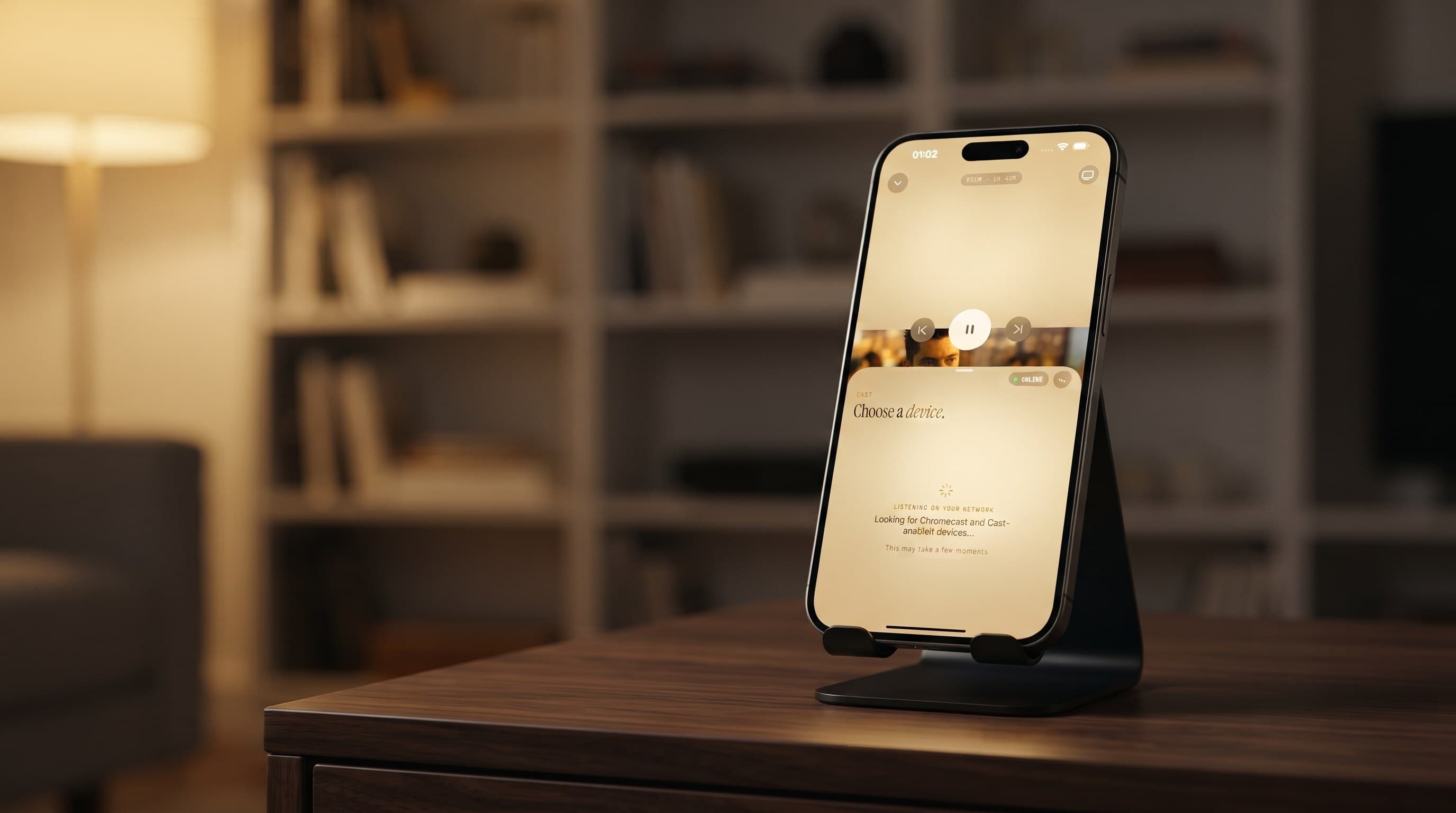
- Casting works differently by platform: AirPlay and Chromecast (Google Cast) are both available on iOS, while Android supports Chromecast.
What Is Maximus IPTV Player, and Which Screens Does It Actually Run On?
Before decoding the acronyms, it helps to know what app you're decoding them for. Maximus IPTV Player is a cross-platform IPTV player — meaning it plays live channels and video-on-demand content from sources you already have, rather than supplying any content itself. It's free to download, with an optional premium subscription for anyone who wants extra features, and it's built to work the same way whether you're holding a phone or sitting across the room from a television.
On iOS, Maximus IPTV Player runs on iPhone, iPad, and Apple TV, all from the same Apple App Store listing. On Android, it runs on phones, tablets, and Android TV / Google TV — again, all shipped from a single app, so one Google Play listing covers every Android form factor in your house. That "one app, every screen" design is why the terms in this glossary show up identically no matter which device you're setting up: the same source types, the same guide, the same casting options.

What Do M3U and M3U8 Actually Mean?
M3U is a plain-text playlist file format — originally built for audio players in the 1990s, later adopted almost universally by IPTV services because it's simple: a list of stream URLs, one per line, sometimes with channel names and logos attached. When you add a source to Maximus IPTV Player using an M3U link, you're really just handing it a text file's worth of addresses and letting the app organize them into a proper channel list, with the country filters, favorites, and channel groups you actually interact with.
M3U8 is the same idea with one important difference: it's explicitly UTF-8 encoded, which matters because it's the playlist format used by HLS (more on that below). In practice, most IPTV providers hand out M3U8 links today, and Maximus IPTV Player treats both formats the same way from a setup standpoint — you paste the link, the app does the parsing. If your provider gave you a ".m3u" or ".m3u8" URL, either one drops into the same "Add a Source" flow.
What Is a Stalker Portal, and How Is It Different From M3U?
Stalker Portal (sometimes just called "Portal") is a different delivery model entirely. Instead of a single playlist link, a Stalker Portal source needs a portal URL plus a MAC address, which the provider assigns to authenticate your specific connection. It's more common with certain regional and business-oriented IPTV providers, and it typically supports more dynamic features on the provider's side — like account-level changes that don't require you to grab a brand-new link.
Maximus IPTV Player supports both M3U/M3U8 and Stalker Portal as source types, and its multi-source management means you're not locked into picking one. You can add an M3U playlist for one provider and a Stalker Portal connection for another, and the app merges everything into a single combined library — one home screen, one search, one set of favorites, regardless of which delivery method is feeding each channel behind the scenes.
What Does EPG Stand For, and Why Does It Matter?
EPG stands for Electronic Program Guide — the on-screen schedule grid that tells you what's airing right now and what's coming up next, channel by channel, hour by hour. Without an EPG, an IPTV channel list is just names with no context; you'd have to tune in and hope. With one, Maximus IPTV Player can show you a timeline view with a live "now" indicator, let you filter the guide by category (Sports, Movies, Kids, and more), and surface what's on the air directly from the home screen so you're not hunting for it.
Not every source automatically includes reliable EPG data — it depends on what your provider supplies alongside the playlist or portal connection — but when it's available, Maximus IPTV Player's guide turns a wall of channels into something you can actually plan around.
What Is HLS, and Why Does It Matter for Buffering?
HLS stands for HTTP Live Streaming, a delivery method (originally developed by Apple) that breaks video into short segments — commonly somewhere in the 6-to-10-second range — and streams them one after another over standard web connections. The practical benefit is resilience: if your connection dips for a moment, the player can adjust rather than freezing entirely, which is a big part of what people mean when they talk about "buffer-free" playback. HLS is also why M3U8 playlists exist in the first place — M3U8 is the manifest format HLS uses to describe which segments to play and in what order.
You don't need to manage any of this directly in Maximus IPTV Player; it's handled behind the scenes. But knowing HLS exists explains why playback quality can vary by provider and connection, even when the app itself is doing everything right.

Do I Need a VPN to Use Maximus IPTV Player?
VPN stands for Virtual Private Network — a service that routes your internet traffic through a different server, which can help with general connection stability and privacy on public or restrictive networks. Maximus IPTV Player itself doesn't require a VPN to function, and using one is entirely a personal networking choice rather than something the app depends on. Whether you use a VPN comes down to your own network setup, your provider's recommendations, and your comfort level — Maximus IPTV Player works the same either way for its own legal-streaming feature set, and it's worth being clear that all guidance here assumes you're connecting to your own legal IPTV subscription or playlist, not any pirated source.
AirPlay vs. Chromecast (Google Cast): What's the Difference?
Both are casting protocols that send video from your phone or tablet to a TV, but they're not interchangeable. AirPlay is Apple's casting technology — it only works from Apple devices to AirPlay-compatible displays, and it's not available on Android. Chromecast, also known as Google Cast, is Google's protocol, and importantly, it isn't limited to Android: it works from iOS too. That means on an iPhone or iPad, Maximus IPTV Player supports both AirPlay and Chromecast side by side, while on Android it supports Chromecast. If you've ever wondered why a casting button offers different options depending on which phone you're holding, this is why.
What Do "4K" and "Buffer-Free Playback" Really Mean?
4K refers to video resolution — specifically 3840×2160 pixels, roughly four times the pixel count of standard 1080p Full HD. Maximus IPTV Player supports 4K playback when your source provides a 4K stream and your connection can sustain it; the app doesn't upscale lower-resolution channels into fake 4K, it plays what's actually being delivered. "Buffer-free" isn't a guarantee that buffering can never happen (that depends on your internet connection and your provider's stream quality) — it describes the app's design goal of minimizing unnecessary stalls through efficient HLS handling, so you're not fighting the player itself on top of whatever your network is doing.
Frequently Asked Questions
Is Maximus IPTV Player free? Yes — it's free to download on both the Apple App Store and Google Play, with an optional premium subscription available for users who want it.
Does Maximus IPTV Player support both M3U and Stalker Portal sources at the same time? Yes. Its multi-source management lets you combine M3U/M3U8 playlists and Stalker Portal connections into one unified library.
What's the difference between M3U and M3U8? M3U8 is the UTF-8 encoded version of the M3U playlist format, and it's the manifest type used by HLS streaming — otherwise, Maximus IPTV Player handles both the same way.
Can I cast from an iPhone to my TV? Yes, using either AirPlay or Chromecast — both are supported on iOS.
Does Maximus IPTV Player work on Android TV or Google TV? Yes. Android TV and Google TV are supported from the same app available on Google Play, alongside Android phones and tablets.
Do I need to understand all these terms to use the app? No — Maximus IPTV Player handles the technical parsing automatically. This glossary is here so the setup screens make sense, not because you need to configure anything manually.
Putting the Vocabulary to Work
None of these terms are complicated once they're defined — they're just rarely explained in one place before you're staring at an "Add a Source" screen wondering whether to paste a link or type in a MAC address. Now that you know an M3U8 link is just an HLS-flavored playlist, that a Stalker Portal is a different (not worse) way to connect, that EPG is the guide grid, and that Chromecast works from your iPhone just as well as your Android phone, the whole setup process should feel a lot less like guesswork.
Maximus IPTV Player is available now on the Apple App Store for iPhone, iPad, and Apple TV, and on Google Play for Android phones, tablets, and Android TV / Google TV. Download it free and put this glossary to use on your own sources.
Written by
Maximus IPTV Team